How do you pack a bee that will not fit in a moving box?
That is a real question on one of our current projects.
KejaMove is carrying out a specialist museum exhibit relocation for the Kenya Museum Society, moving a surveyed collection from Nairobi National Museum to Gedi on the Coast, near Malindi. The brief covers careful packing, construction of relocation crates, provision of protective wrapping materials, transport, and offloading of the surveyed exhibits at the destination.
This is not a conventional home or office move. Some of the pieces are oversized bee models with projecting legs and wings. Others include glass display cases, large exhibition panels and structures that were built to be seen in a gallery, not stacked into a truck.
That changes the job before the vehicle even moves.
Project at a glance: Kenya Museum Society · Nairobi National Museum ? Gedi, near Malindi · Specialist packing · Custom relocation crating · Protected long-distance transport · Project currently in progress.
What museum exhibit relocation requires before the truck moves
The first challenge is not distance. It is understanding what can be touched, what can carry weight, what can flex, what can break, and where pressure must never be applied.
A normal carton works because the contents are smaller than the box and can be cushioned inside it. Many exhibition pieces do not give you that luxury. Their shape is the problem.
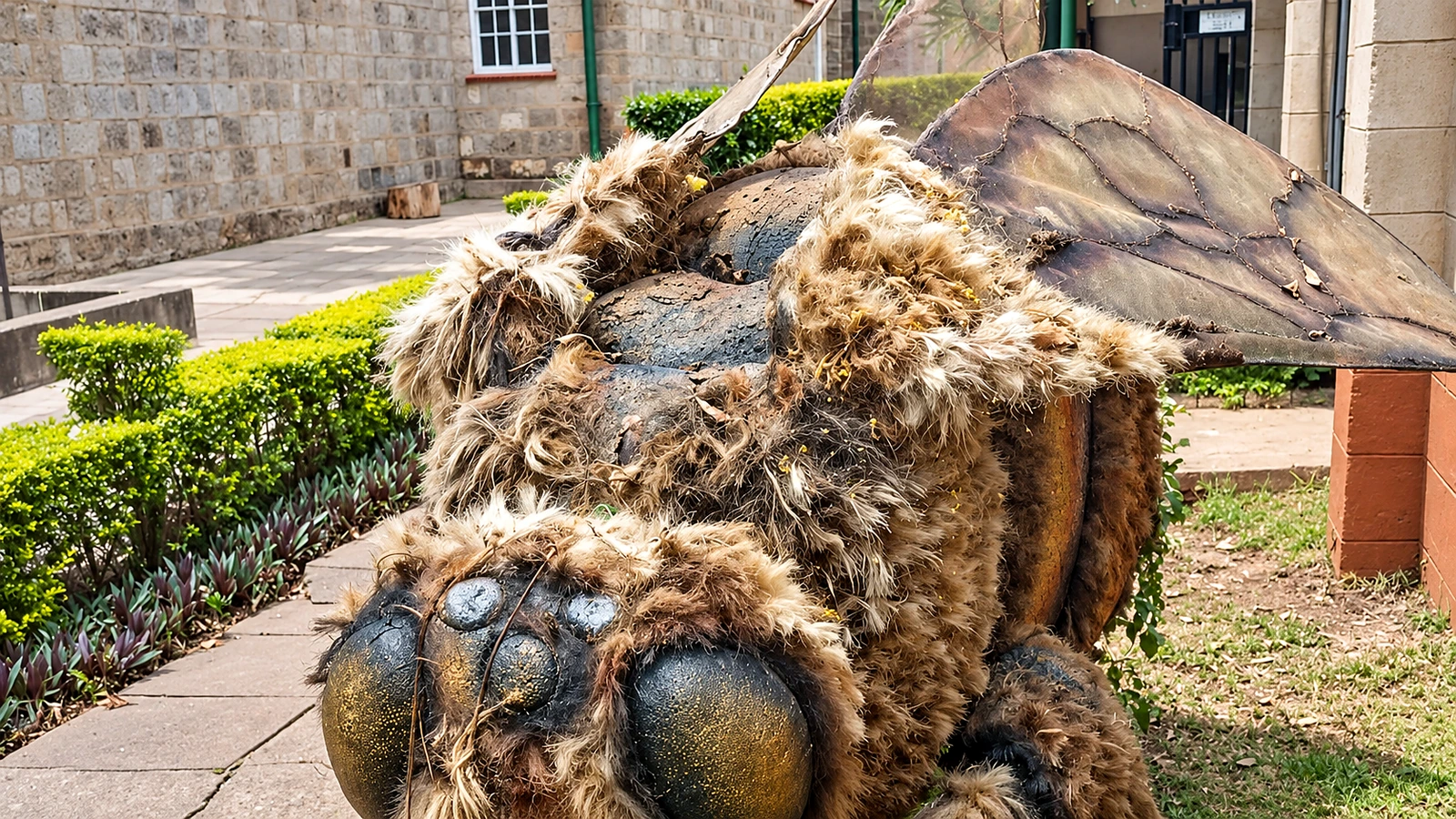
Look at the oversized bee exhibits in this project. The body may be substantial, but the wings, legs and other projecting elements create vulnerable points around it. Wrapping the whole object tightly would not automatically make it safer; pressure in the wrong place could simply transfer force onto the parts you are trying to protect.
So the packing plan has to start with the exhibit itself.
Building the protection around the exhibit
For the largest and most fragile pieces, the crate becomes part of the moving solution.
Our team is constructing timber relocation frames around selected exhibits rather than trying to make the exhibit conform to a standard box. The structure creates a rigid outer boundary and gives the moving crew something designed for handling, securing and loading without relying on the delicate parts of the display itself.
Inside that outer structure, packing materials can then be used to separate the exhibit from hard surfaces, reduce unwanted movement and protect exposed sections. The photographs from the project show the process at different stages: the exhibit positioned within the frame, internal protective material being added, and the outer crate taking shape around it.
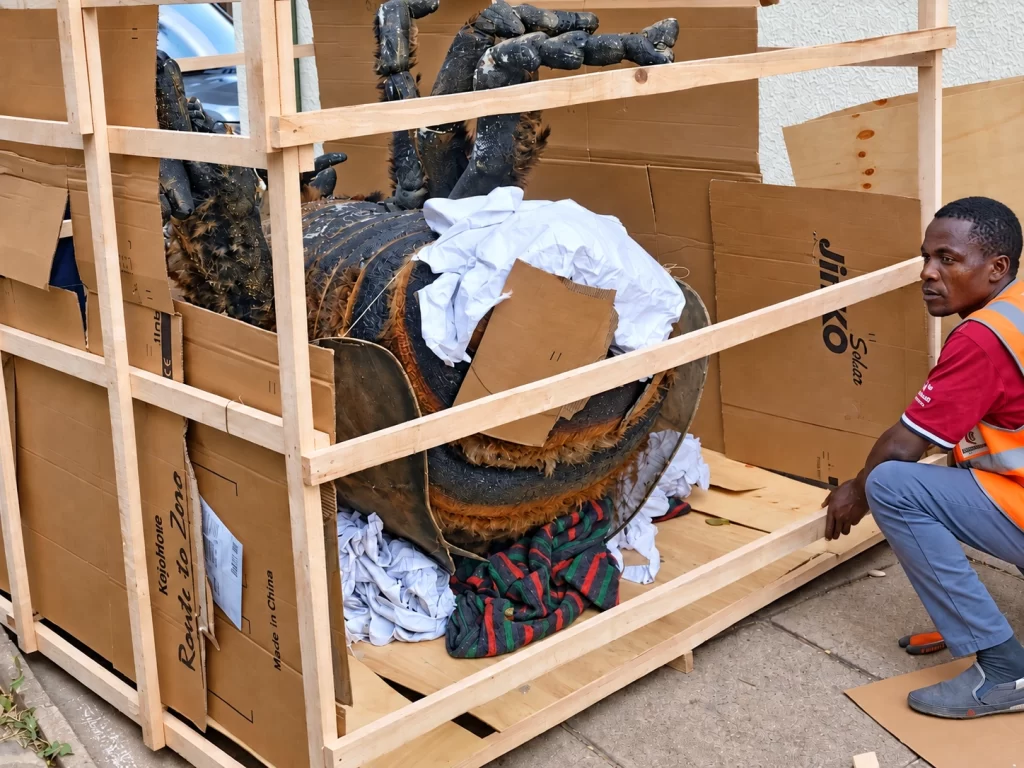
A large bee exhibit being protected inside a custom timber relocation frame. Photo: KejaMove.
This is why custom crating cannot be treated as an add-on at the end of a move. Dimensions, access, handling points and the final loading plan all influence how the crate should be built.
It is also the same principle we use when planning moves for sculpture, fine art, antiques and other unusually shaped items: the protection has to be designed around the object, not the other way round.
Glass needs a different plan again
The collection also includes glass display cases. They present a different kind of risk from the oversized models.
Glass does not need to look complicated to be difficult to move. A large pane can be strong when it is standing correctly in a display, yet vulnerable to edge impact, twisting or pressure during handling. The base, glass enclosure and any removable components therefore need to be considered as part of the packing and loading sequence rather than treated as one ordinary piece of furniture.
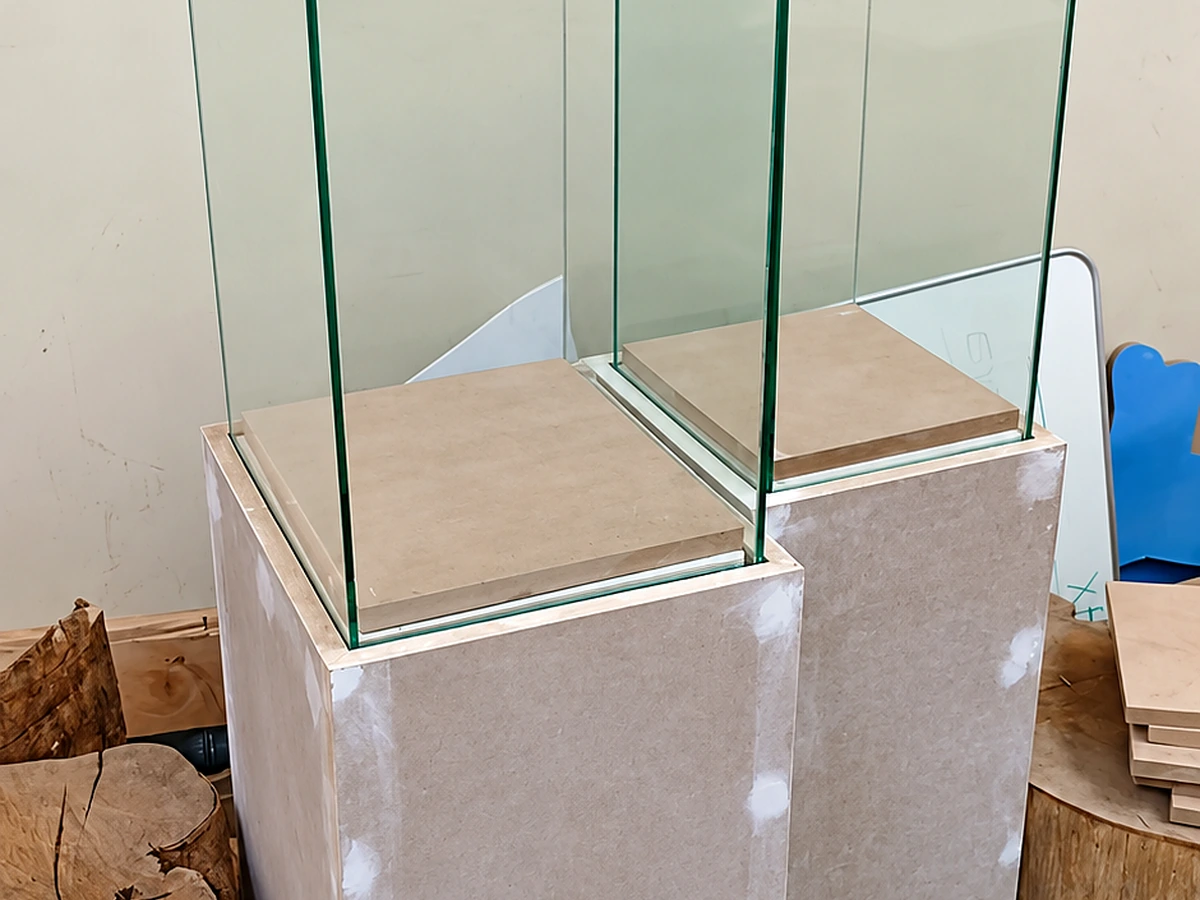
Glass display cases among the surveyed exhibits being prepared for relocation. Photo: KejaMove.
The practical question for the moving team is always the same: what could happen to this item between where it is now and where it needs to be?
That means thinking beyond the few metres between a gallery and a truck. There is lifting, doorway clearance, loading, vehicle movement, unloading and final placement to account for. Protection has to work through the whole chain.
Not every exhibit presents the same problem
One of the things the project makes especially visible is how varied an exhibition can be.
Some pieces are compact but fragile. Some are large and awkward. Some have broad flat surfaces. Others have thin projections, irregular geometry or a structure that cannot safely carry another item against it. There are also exhibition components whose risk comes less from fragility than from their dimensions and the difficulty of manoeuvring them through normal access points.
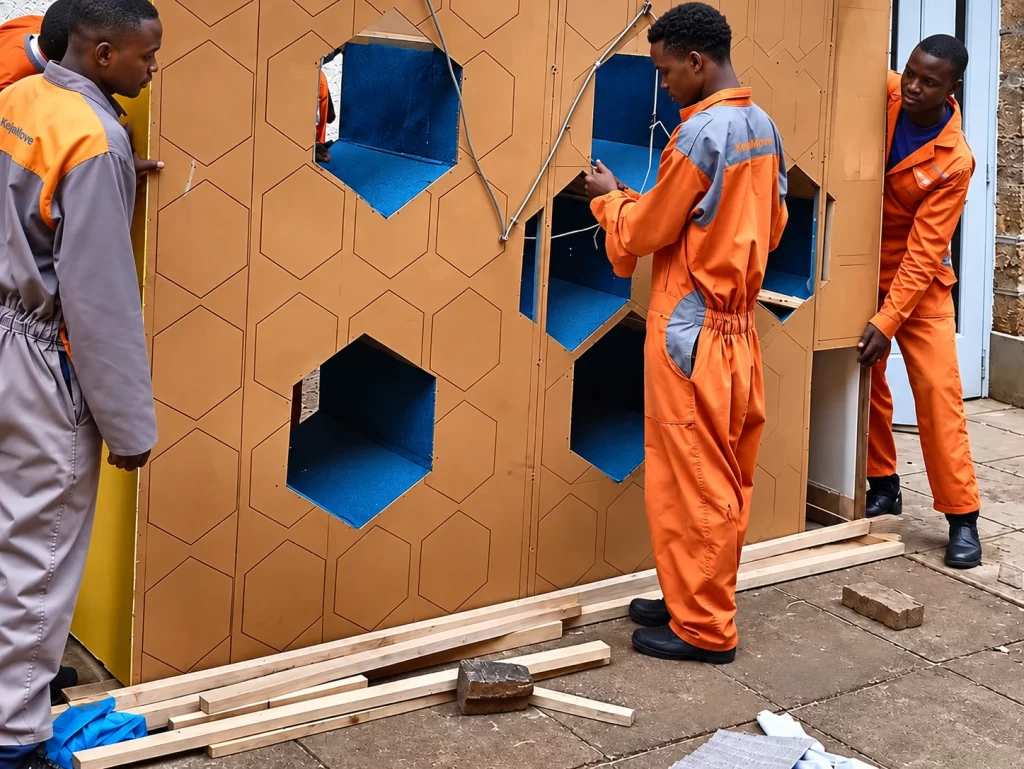
KejaMove crew handling the large honeycomb exhibition structure
A good specialist move therefore does not begin with one packing method and repeat it across the room. It begins with a survey, then groups items according to what each one actually needs.
The same applies to large exhibition structures.
For this project, KejaMove’s scope includes the materials and labour required to pack the surveyed exhibits, construct relocation crates where needed, load them into covered moving vehicles, transport them to Gedi and offload them at their agreed locations.
Inside the Museum Relocation
A closer look at the exhibits, custom crating and handling work behind the Nairobi-to-Gedi move.


Preparing for the road from Nairobi to Gedi
Once the exhibits are protected, the job becomes a long-distance relocation.
The route from Nairobi to the Coast adds hours of vehicle movement after the items have left the controlled environment of the museum. That makes the loading plan important. A crate that is well made but badly positioned in the vehicle can still be exposed to unnecessary movement. Fragile pieces also cannot simply be placed wherever there is remaining space.
The move therefore has to be planned as one continuous operation: survey, packing, crating, loading, secure transport and destination offloading.
That is also why the project is being handled as a surveyed move rather than priced or planned from a generic inventory. The team needs to know what the pieces are, how large they are and what protection they require before assigning the packing materials, crew and vehicle space.
For longer routes across Kenya, this approach is the same one behind our long-distance moving service: the route matters, but the inventory and handling requirements determine how the move should actually be executed.
Why Gedi is a fitting destination
The destination gives this project another layer of significance.
The Historic Town and Archaeological Site of Gedi was inscribed on the UNESCO World Heritage List in 2024. The site preserves the remains of one of the important Swahili towns that formed part of the trading and cultural networks of the East African coast between the 10th and 17th centuries.
Kenya Museum Society, our client on this move, is a non-profit organisation established in 1970 to support and promote the National Museums of Kenya. Its work includes raising funds and supporting museum programmes, exhibitions, research, training and collection development.
So although our role here is logistical, the objects are moving between places whose work is about public knowledge, heritage and exhibition. That makes careful handling more than a matter of avoiding a repair bill. The exhibits have to arrive ready for the next part of their public life.
What specialist moving looks like in practice
There is a tendency to use words such as specialist, fragile and high-value loosely in the moving industry. Projects like this give those words a practical meaning.
Sometimes specialist moving means building a crate instead of reaching for another roll of wrap. Sometimes it means treating glass separately from the structure beneath it. Sometimes it means accepting that two objects standing next to each other in an exhibition may need completely different packing methods.
Most of that work happens before the truck leaves.
KejaMove already handles fine art, antiques and other fragile items that require additional planning or custom crating. The Kenya Museum Society project takes that capability into a particularly unusual environment: a museum exhibition containing large, delicate and irregular display pieces that have to travel from Nairobi to the Coast.
The project is still in progress, and we will update this case study as the relocation reaches its next stages.
Need to move something that does not fit in a normal box?
If you are planning the relocation of an exhibition, gallery, sculpture, fragile display, antique, collection or other unusual item, send us photographs, approximate dimensions, origin and destination. We will advise whether the move can be planned remotely or needs an on-site survey before quotation.
Talk to KejaMove about a specialist move or explore our long-distance moving services across Kenya.
Planning a move?
KejaMove Can Help With That
Tell us what you're moving, where you're moving from and where you're going, and we'll help you plan the rest.